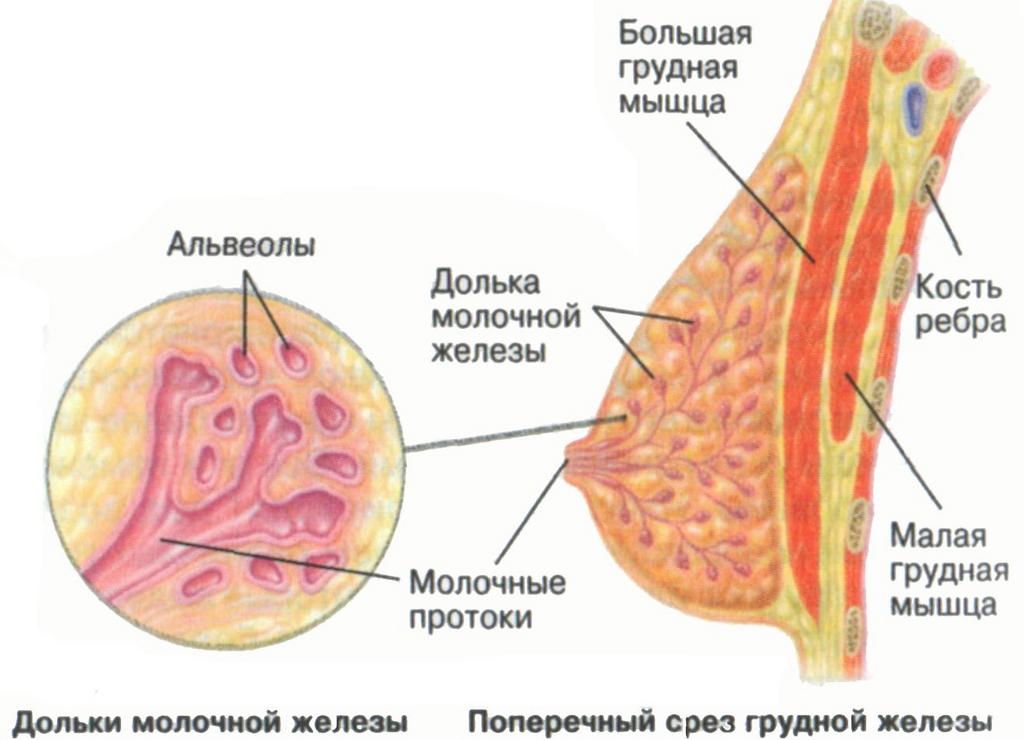
Breast cancer, or in other words breast carcinoma - is one of the most common oncological diseases. The late diagnosis, the wrong approach to the education of patients - all this causes a high mortality among young women around the world.
The enemy needs to know in person, and therefore, further we will tell you about the main types of breast carcinoma, how to recognize it at the initial stages, and also the methods of treating this terrible disease.
Tumors of the breast, most often epithelial, and for them the term carcinoma is used.
Histological types of breast carcinoma
- Protocolal carcinoma of the breast. This type of tumor is of two types - non-invasive and invasive ductal carcinoma of the breast. Noninvasive carcinoma is called in situ and is the initial stage of the disease. Relatively well treatable. In case of diagnosis at this stage - the prognosis is favorable, often women after a proper therapy can lead a normal life. Invasive ductal carcinoma of the breast is 75% of all diagnosed breast tumors. Often metastasizes into the lymph nodes, is an aggressive form of cancer;
- Lobular carcinoma of the mammary gland. Like ductal carcinoma, it has two subtypes - in situ (non-invasive) and invasive lobular carcinoma of the mammary gland. Women are more often subject to this predicament in the pre-menopausal period. Occurs less often than invasive ductal carcinoma, but in the case of lobular cancer, abnormal cells spread rapidly over the entire surface of the breast. Often, tumors are found on both mammary glands;
- Mucinous carcinoma of the mammary gland. Mucinous carcinoma of the breast is a rare form of breast cancer. It occurs most often in the seventh decade of life, and is characterized by the fact that abnormal cancer cells produce "slime" that fills the ducts and lobules of the breast.
Symptoms of breast cancer
In the initial stages, breast cancer can occur without any symptoms: the patient does not experience any pain or discomfort. But, if you noted the following symptoms - immediately consult a doctor:
- change in the shape and size of the breast;
- "Orange peel" on the chest, or any other changes;
- recent inversion of the nipple, changes in skin or shape;
- discharge from the chest, especially bloody.
Treatment of invasive breast carcinoma
Treatment of invasive breast carcinoma consists of surgical removal of the tumor, and in some cases of total mastectomy (removal of the breast).
Even in the absence of lesion of lymph nodes during examination and ultrasound, during the operation the doctor necessarily takes a biopsy (sample) from the axillary lymph nodes to make sure that the cancer has not spread.
In case of removal of the tumor with preservation of the breast, it is necessary to undergo a course of radiotherapy, which significantly (by 70%) reduces the risk of recurrence.
Also, radiotherapy is an important tool for "strengthening" the results of total mastectomy. It is recommended in the following cases:
- positive surgical edge - when cancer cells are found on the edges of seized tissue;
- primary tumors larger than 5 cm;
- involvement of 4 or more lymph nodes.
It is important to know that breast cancer is something that can happen to everyone. Therefore, the list of mandatory annual preventive examinations, includes and examination of the mammary gland in a gynecologist. So be careful, take care of your health!